In the high-stakes arena of modern serious drifting, podium finishes is no longer exclusively a result of raw torque or driver bravado. Conversely, it has become a intricate engineering challenge that necessitates a meticulous marriage of picking a proven vehicle platform, arming it with the highest-quality drift-spec hardware, and, most importantly, comprehending its live behavior on the circuit through cutting-edge vehicle dynamics analysis tools. This definitive manual acts as your roadmap starting from the very first concept of a project car right through to the last data-informed tweaks that elevate a strong vehicle into a repeatable winner. We will thoroughly explore the methodical process of vehicle alignment optimization, illustrating how a advanced drift tuning app like GripDial removes assumptions and delivers unparalleled clarity into your car's true dynamics.
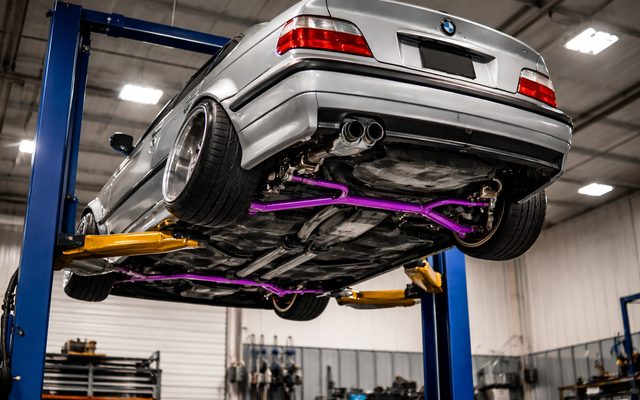
The cornerstone of any successful drift machine is, without question, the platform itself. A select group of vehicles have attained iconic status within the international sliding culture due to their natural balance, durable build quality, and the immense ecosystem of performance support available. Selecting the optimal starting point is the initial and most significant choice a builder will make. For instance, the BMW E36 is commonly accepted as among the finest all-around drift cars of the modern era. Its almost ideal balanced front-to-rear weight, combined with a rear-wheel-drive setup and extremely reliable inline-six engines, forms a platform that is both easy to handle for novices and highly effective in the control of a professional competitor. The successor of this lineage, the BMW E46 platform, improves on these strengths with a even more sophisticated chassis, increased track for enhanced high-speed stability, and even increased lock straight from the OEM. A different formidable contender in the pro arena is the Corvette C6.
This V8-powered track weapon introduces a particular array of strengths to the drifting sport, including a light aluminum frame, a rear-mounted drivetrain component that aids in an perfect balance, and the immense low-end power of a powerful LS-series V8 engine. This blend transforms it into an utter force on track, capable of starting and sustaining long slides with relatively effortless use of power. For those looking for remarkable performance per dollar, the Nissan 350Z rises above as a top-tier candidate. It arrives from the factory with a rigid platform, a competent factory LSD, and the responsive VQ35DE engine that offers sufficient performance for learning and progressing in the activity. Its newer version, the Nissan Z34, brings additional improvements in body strength, handling precision, and outright engine output, solidifying its position as a popular selection among professional pilots. Further historic platforms that deserve mention include the lightweight rotary-powered Mazda FC RX-7, the ever-present S13 Silvia/240SX, the V8-powered SN95 generation Mustang, the more recent E90 3 Series, and the compact yet unbelievably playful and forgiving Mazda MX-5. All of these chassis offers a distinct array of traits, difficulties, and capabilities, but they all share the fundamental ingredients necessary to serve as a competitive drift car.
However, picking the optimal platform is only the first step. To unlock the true potential of any of these machines, major upgrades to the steering system and damping and springing systems are absolutely essential. This is where the world of specialist aftermarket components becomes vital importance. The most most impactful modification for a serious drift machine is the installation of a maximum-angle drift angle kit. These engineered systems, like those engineered by specialist companies like SLR Speed, are engineered to radically expand the car's maximum lock-to-lock rotation. A factory street car is highly restricted in how far its front wheels can rotate, a design limitation for on-road operation. In sliding, however, aggressive opposite lock is frequently necessary to manage and hold a slide. An steering kit replaces the OEM steering knuckles, rod ends, and often control arms with parts that enable the front tires to achieve degrees of turn over 70 or even 80 °, as opposed to a typical OEM setting of around 40 to 50 °.
This vastly greater steering angle offers the driver with significantly more command during a angle, allowing it to be considerably more straightforward to start a oversteer moment, sustain it through a extended corner, and switch fluidly from one direction to the other. The improvement in handling is nothing short of transformative. Combined with a properly chosen modification is the equally essential enhancement to the vehicle's damping system. Generic or including high-end road adjustable suspension are generally not designed for the unique and extreme demands of sliding. A purpose-built system of suspension units is paramount. These specific dampers have unique piston tuning and spring rates that are optimized for the rapid load shifting that is typical of aggressive driving. When a operator initiates a drift, the vehicle's mass is thrown rapidly to the outer of the turn. Correct competition dampers control this transfer in a predictable manner, allowing the chassis to settle quickly and providing the pilot precise response through the controls and cockpit. They additionally enable precise adjustment of ride height, rebound and compression firmness, and cross-weight, which are all key aspects of dialing in the car's handling to a specific track or competition approach. As a system, a high-quality steering angle kit and a expertly specified set of performance suspension units form the absolute hardware base upon which all later tuning is constructed.
Once the fundamental hardware is in place, the next critical phase in the build is the meticulous adjustment of the car's alignment. This is the realm of vehicle alignment optimization, a procedure that can feel intimidating to the newcomer but is, in fact, the defining factor to turning a set of capable components into a cohesive and predictable vehicle. The most debated element of suspension geometry for drifting is definitely camber angle. Camber is the tilt of the tire compared to the upright plane when observed from the forward of the car. If the upper part of the tire is tilted towards the chassis, this is known as inward tilt. For sliding, an inward tilt on the front axle wheels is universally used and is regarded as critical. The logic is intrinsically tied to vehicle dynamics.
When a car is turning at high angles, the body tilts towards the external of the corner. This lean causes the outside front tire to diminish its best grip area with the track surface. By adding inward lean, the tire is pre-leaned to counteract this tilt. As the vehicle tilts into the turn, the outside front tire gains a better contact patch on the road surface, maximizing its grip at the precise point when it is needed most for steering authority. Commonly, front angles for a competition drift car vary from approximately -3 degrees to car alignment tuning as extreme as -5 degrees or even beyond, depending on the details of the car geometry, compound choice, and driver style. The rear axle tires also employ negative camber, but the settings are typically more modest and less aggressive than the front axle. Excessive negative camber at the rear can cause the vehicle drift angle kits to excessively prone to oversteer and hard to predict on power application, as it diminishes the available tire footprint of the powered tires during linear throttle application. Hence, rear axle adjustments are commonly in the vicinity of -1 degree to -3 degrees, achieving a delicate balance between giving adequate lateral traction to aid in entering and sustaining the angle while simultaneously keeping good grip for acceleration the bend. alignment is merely one part of the broader suspension geometry equation, which also includes toe, caster, and suspension-induced steering modification.
Toe setting describes the direction of the wheels when viewed from a bird's-eye view. Positive toe means the leading edges of the wheels are closer together than the trailing edges, while outward toe means the reverse. For drifting, a small amount of front axle toe out is often used to improve the turn-in handling reaction, making the car feel more responsive and ready to start a slide. Rear axle toe setting is typically set to neutral or a extremely slight amount of toe-in to foster predictability under acceleration. self-centering is the frontwards or rearward tilt of the suspension pivot when looked at from the side of the car. Positive caster angle improves steering feel and stability confidence, and it also boosts negative camber effect during cornering, which is extremely useful. Adjusting these values is a intricate dance where a adjustment to one parameter can and will impact the others. The old-school method for setting a car's suspension geometry for sliding has long been a labor-intensive affair of trial and error. A pilot or team would introduce a change based on a hunch, drive the chassis on track, rely on the pilot's individual sensation and impressions, and then make a further tweak. This cycle would repeat time after time until the car felt "right" or the scheduled track session ran out. This approach is not just incredibly wasteful in terms of time and tires, fuel, and parts, but it is also inherently imprecise.
Driver sensation is a notoriously inconsistent measurement tool, influenced by numerous elements such as fatigue, varying track grip levels, temperature, and simply the mindset of the operator on that given day. What feels "oversteery" on one run might feel "pushing" on the next pass, causing confusing information and ineffective tweaks. This traditional challenge in chassis setup is exactly where state-of-the-art engineering tools has stepped in to transform the process.
The development and adoption of advanced drift telemetry software has introduced a radically different paradigm for building and optimizing competitive drift cars. These systems, exemplified by innovative products like GripDial, function by directly measuring the real-time mechanical movement of the car as it is operated on the circuit. Unlike relying on subjective feedback, these devices acquire measurable information on critical variables such as shock absorber movement, individual tire rotation, lateral and longitudinal g-forces, steering angle, and throttle and brake application. This acquired telemetry is then analyzed by powerful software that can plot and analyze the data in a clear format. For the very first time, drivers and teams can visualize specifically what the chassis is performing at every moment of a drift. This function revolutionizes the whole suspension tuning workflow. Think about the specific goal of optimizing the front negative camber for a specific car. Instead of introducing a adjustment from -3 degrees to -3.5 degrees and then driving many runs to try and "feel" a change, a vehicle dynamics tool can provide instant and irrefutable information. The application can indicate visually how the tire's grip is acting during the most important phases of a drift: the initial flick, holding the angle, and transition. It can show if the existing value is allowing the outside front tire to maintain maximum loading or if the compound is overloaded on its outside shoulder.
The software can then suggest empirical advice for change. Perhaps the data shows that the outside front tire is even overworking its edge at -3.5 degrees of camber, suggesting that a move towards inward lean, say -4 degrees, might be advantageous. On the other hand, the information might reveal that the tire is failing to coming up to temperature or that the inner edge is wearing too quickly, which could suggest that there is excessive angle and a slight lessening back to -3.2 degrees would be more efficient. This level of granularity and practical insight was literally impossible in the days of exclusively seat-of-the-pants tuning.
The benefit of utilizing a dedicated suspension tuning tool goes much further than merely dialing in alignment. It serves as an essential coilover setup tips that is customized to your exact car. When fine-tuning the damping clickers on your suspension, instead of depending on general tips or mimicking another car's settings, you can use the telemetry to see how the car is reacting in relation to your changes. The tool can display the damper movement path over a run, showing if the coilovers are managing the weight transfer optimally or if they are causing the vehicle to bounce excessively after a transition. It can assist in pinpointing problems like bottoming out or topping out, allowing you to apply data-backed adjustments to helper springs, rebound/compression values, or stance. This process translates equally to the complex process of corner balancing. In addition to camber angle, the system can give insight into how changes to toe settings and caster are impacting the car's balance during different phases of a slide. For example, it can help you to determine the optimal amount of front toe out for your individual steering configuration and driving style by showing the response time of initial reaction and the predictability of the car at maximum countersteer. This turns the software an exceptionally useful drift suspension tuning guide that is dynamically updated by the actual performance of your specific car on the circuit. It shifts the whole endeavor from a mysterious craft into a repeatable engineering procedure.
Additionally, the utility of a tool like data acquisition is in drift telemetry software no way confined to professional tuners with large resources. For the amateur enthusiast, it serves as an amazing equalizer. It in essence gives the tuner with the knowledge of a professional suspension specialist without needing the typical cost. It drastically shortens the development time by delivering definitive answers to questions that would traditionally take countless track days of experience to answer. A builder can see how their individual vehicle responds to different adjustments, building a more profound knowledge of vehicle dynamics in the process. It additionally makes accessible professional suspension engineering concepts, allowing every enthusiast with the desire to optimize their vehicle to achieve it in a efficient and successful fashion. This is notably valuable in a discipline like sliding, where tuning know-how has historically been a closely guarded commodity among elite crews. Today, that power can be in the hands of any motivated enthusiast.
In the final analysis, the journey to building and dialing in the ideal competitive drift machine is a multi-stage endeavor that smoothly blends time-honored hardware knowledge with revolutionary digital solutions. It starts with the wise selection of a proven chassis, followed by the installation of non-negotiable performance parts like high-performance angle modification systems and correctly valved competition adjustable dampers. The process then moves into the intricate phase of car suspension tuning, where settings like camber angle, toe setting, and caster angle are precisely configured to complement the vehicle's new hardware and the operator's specific style. The final step, and what genuinely differentiates the today's methodology from the past, is the use of a sophisticated drift telemetry software. This platform removes the guesswork and trial and error of purely feel-based setup by delivering objective, live information on how the chassis is actually behaving. It serves as an indispensable diagnostic aid, a comprehensive coilover setup manual, and a comprehensive vehicle dynamics tool. As a complete package, this integrated philosophy guarantees that each and every aspect of the competition vehicle—from the choice of the platform to the final tweak on the coilover—is perfected for maximum success on the track. It represents the complete evolution of the art of sliding, bridging mechanical driving skill with surgical chassis dynamics to build the most competitive cars imaginable.